

Watch the Lyrid Meteor Shower!
Tonight is the final night of Dark Sky Week and what better way to celebrate than with nature's own light show!
Tonight is the final night of Dark Sky Week and what better way to celebrate than with nature's own light show!
The Lyrid meteor shower will light up the sky this weekend and viewing conditions are close to ideal, with the moon illuminated at only 6% and setting around 10:30pm. Fun fact: the Lyrid meteor shower is one of the oldest recorded showers, with observations dating back to 687 B.C.
So grab a blanket, lay down under the open night sky, allow your eyes to adjust, and watch the show! If you're new to the night sky, download the Night Sky App (free on iOS). The app uses augmented reality to show you the constellations right above your head
Use the time to create a Dark Sky experience that inspires creativity. Things like:
Nighttime Photography: With the dark skies, try your hand at nighttime photography. Capturing stunning images of the night sky, the Milky Way, and the stars can be a creative outlet that can be deeply rewarding. (Night sky photography for beginners)
Poetry/Prose: In a dark sky community, spend time writing poetry or prose inspired by the night sky. Use the darkness, stars, and constellations as inspiration for your writing. (Night Sky, a poem by Don Bogen)
Painting/Drawing: Use the dark sky environment to inspire artistic expression. Create paintings, drawings, or other forms of art that capture the beauty and wonder of the night sky. (How to draw a night sky)
Watching a meteor shower and creating art under a dark sky can be an unforgettable experience. So, gather your friends and family, head to your backyard, and marvel at the wonders of the night sky. Take a moment to appreciate the vastness of the universe and the role we play in it. Who knows, you might even discover a new passion for astronomy!
Read more about the benefits of Dark Skies at Darksky.org. Check back regularly at montenido.org for for future posts on our Dark Sky Community.

The Consequences of Light Pollution on Wildlife
As humans, we tend to think of the night as a time of rest and recuperation. But for many animals, it's a time of activity and exploration. Whether they're hunting for food, socializing with other animals, or navigating their way through the darkness, wildlife relies on the night to survive. And for many of these creatures, dark skies are an essential component of their habitat.

The above is a pre-dawn photo of Monte Nido on night six of Dark Sky Week!
As humans, we tend to think of the night as a time of rest and recuperation. But for many animals, it's a time of activity and exploration. Whether they're hunting for food, socializing with other animals, or navigating their way through the darkness, wildlife relies on the night to survive. And for many of these creatures, dark skies are an essential component of their habitat.
The introduction of artificial light into natural ecosystems can have a range of negative impacts on the ecology and functioning of these systems. Here are some ways in which natural ecosystems can break down due to the introduction of artificial light:
Disruption of natural behavior patterns: Artificial light can alter the behavior patterns of wildlife in many ways. Nocturnal animals may become active during the day or reduce their activity levels altogether, while diurnal animals may become more active at night. This disruption of natural behavior patterns can have cascading effects throughout the ecosystem, affecting interactions between different species and altering the balance of predator-prey relationships.
Changes in food web dynamics: Artificial light can disrupt the timing of natural events such as seasonal migrations, breeding, and feeding patterns. This can have significant impacts on the availability of food for different species, and can lead to imbalances in food web dynamics. For example, if the timing of insect emergence is altered by artificial light, it can affect the availability of food for insectivorous birds, which can in turn impact the population levels of those birds.
Impacts on pollination: Artificial light can also impact the pollination of plants by disrupting the behavior of nocturnal pollinators such as bats and moths. This can have significant impacts on the reproduction and survival of plants, and can ultimately affect the structure and composition of entire ecosystems.
Effects on circadian rhythms and hormone levels: Artificial light can interfere with the circadian rhythms and hormone levels of wildlife, which can impact their overall health and survival. This can include impacts on reproductive success, immune function, and behavior.
One example that can be most relevant to us is artificial light making it more difficult for coyotes and owls to hunt effectively. Coyotes and owls use their sense of sight to locate their prey, and bright lights can disorient or confuse them. This may lead to an over population of prey, like gophers, which can have a cascading effect.
Overall, light pollution can have far-reaching and complex effects on the ecology and functioning of our natural ecosystems. In order to minimize these impacts and protect the integrity of natural ecosystems, it is important to reduce light pollution and minimize the use of artificial light in areas where it is not necessary.
Read more about the benefits of Dark Skies at Darksky.org. Check back tomorrow at montenido.org for the final night of Dark Sky Week.

Finding Inner Peace: A Star Gazing Meditation Guide
Meditation has long been known to offer a variety of benefits for the mind and body, and for centuries, people have turned to meditation to find inner peace and relaxation. While meditation can be done anywhere, there is something particularly special about meditating under dark skies.
Meditation has long been known to offer a variety of benefits for the mind and body, and for centuries, people have turned to meditation to find inner peace and relaxation. While meditation can be done anywhere, there is something particularly special about meditating under dark skies.
One of the primary benefits of meditating under dark skies is the sense of peace and stillness that can be found in the darkness. When we meditate under the stars, we are surrounded by the vastness of the universe, and we are reminded of our small place in the world. This can be incredibly grounding and can help us to find a sense of calm and relaxation that may be difficult to achieve in our busy, everyday lives.
Another benefit of meditating under dark skies is the opportunity to connect with the natural world. As we gaze up at the stars, we are reminded of the beauty and majesty of the universe, and we may feel a sense of awe and wonder that can be difficult to find in our day-to-day lives. This connection with the natural world can be incredibly healing and can help us to feel more connected to ourselves, to others, and to the world around us. As Carl Sagan said: "we are made of star stuff." Indeed, most of the elements of our bodies were formed in stars over the course of billions of years and multiple star lifetimes.
So how can you get the most out of your dark sky meditation practice? Here's a simple star gazing meditation to help you get started:
Find a quiet, dark place where you can meditate without distraction. Ideally, you want to be away from any source of distracting lights.
Get comfortable. You can sit or lie down, whichever feels most comfortable for you. Just make sure that you are relaxed and that your body is supported.
Take a few deep breaths to help you relax and to clear your mind.
Focus on your breath. As you inhale and exhale, try to let go of any thoughts or distractions. Slowly allow your mind to become focused on the night sky. Notice the patterns, colors, and movement of the stars. Allow yourself to become fully immersed in the beauty of the night sky, while breathing deeply and feeling the sense of peace that comes with it.
If your mind begins to wander, gently bring it back to your breath.
If you find it difficult to meditate in silence, you can try listening to soft music or guided meditations to help you stay focused.
When you are ready to end your meditation, take a few deep breaths and slowly begin to move your body. Take a moment to appreciate the beauty of the night sky before returning to your daily life.
Meditating under dark skies can be a powerful tool for relaxation, mindfulness, and wonderment. By connecting with the natural world and finding peace in the darkness, we can tap into our inner selves and find a sense of calm and clarity that can be difficult to find in our everyday lives. So next time you are feeling stressed or overwhelmed, sit under the stars and allow yourself to be fully present in the peaceful energy of the night sky.
Read more about the benefits of Dark Skies at Darksky.org. Check back tomorrow at montenido.org for night seven of Dark Sky Week.
Staying Safe in a Dark Sky Community
Dark Sky communities are generally safe communities, but criminal activity can still be a concern for some individuals based on their experiences. When it's dark, our fear response is triggered as our brains try to fill in the gaps and imagine potential dangers lurking in the shadows. This is a normal part of our survival instinct.
Dark Sky communities are generally safe communities, but criminal activity can still be a concern for some individuals based on their experiences. When it's dark, our fear response is triggered as our brains try to fill in the gaps and imagine potential dangers lurking in the shadows. This is a normal part of our survival instinct.
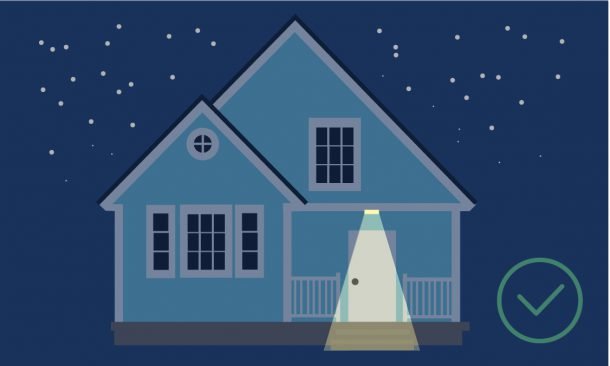
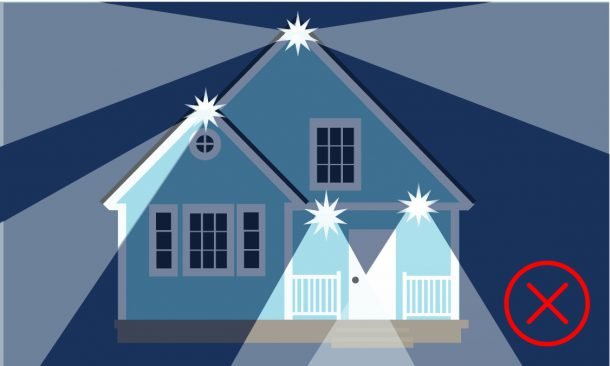
Real security depends on the wise use of lighting. Instead of more and brighter lights, smart lighting that directs light down where it is most useful has the most impact. It is possible to see the stars without compromising safety. Effective lighting that helps people be safe, not just feel safe, is a win-win situation for everyone. We can create a safer environment while keeping the night natural. Here are some simple rules to follow:
Use dark-sky friendly fixtures. That means lights that shine down, not up or sideways, and don't create glare and contrast. Glare from bright, unshielded lights actually decreases safety as it creates deep shadows, making it more difficult to see. The brightness also constricts your pupils, diminishing your eyes' ability to adapt to low-light conditions. You'll be able to see what's in the light but not what's beyond it.
Only use lights when and where needed. Install timers and dimmer switches. Use motion sensors for security lighting and make sure that they are properly installed so that they aren't triggered by small animals or passing cars.
Use the right amount of light. The truth is bad outdoor lighting can decrease safety by making victims and property easier to see. And be sure to install them so they don’t illuminate higher than the eaves of your house and in areas that won’t keep you or your neighbors up.
Use long-wavelength lights with a red or yellow tint to minimize negative health effects. Blue-rich white light sources are also known to increase glare and compromise human vision, especially in the aging eye.
Read more about outdoor lighting, crime, and safety at Darksky.org. Check back tomorrow at montenido.org for night six of Dark Sky Week.

The Alarming Effects of Light Pollution on Your Plants and Garden
Light pollution, which currently affects a quarter of the planet and is increasing by approximately 6% each year, has led to an increase in the number of disrupted circadian rhythms for living beings, including plants.
Light pollution, which currently affects a quarter of the planet and is increasing by approximately 6% each year, has led to an increase in the number of disrupted circadian rhythms for living beings, including plants.
Here's an outtake of an informative article from BBC.com on the effects of light pollution on plants:
While its impacts are still being studied and vary widely across species, scientists do know light pollution is affecting how plants grow and reproduce. It disrupts their seasonal rhythms, their ability to sense and react to natural light, and their fragile relationship with pollinators.
The effects aren't all that dissimilar to jet lag. Say you're flying from London to New York. Since you're traveling to a place five hours behind your home base, you're effectively gaining five hours of either day or night (depending on when you're travelling), which throws your circadian rhythm off kilter. The resulting jet lag can leave you feeling foggy, sleep-deprived, and generally under the weather for several days. That's just the result of one circadian rhythm disruption. Now imagine you're a tree on the side of a city street constantly being exposed to artificial lights from street lamps, cars, and buildings. If your internal system always thinks it's daytime, it can turn your life upside down.
"Plants are like animals in that they need a sleep cycle to process stuff, and what they do is they put attention on different activities at different times of the day. So they need to know the time of day," says Joanne Chory, professor at the Salk Institute for Biological Studies in San Diego, California.
Plants have photoreceptors, 13 that we know of, that they use to determine things like day length. This helps them know when to bloom and, for deciduous trees, when to drop leaves – arguably two of the most important events in a tree's calendar. Five of the photoreceptors absorb near-infrared light from the Moon and starlight, and eight absorb a type of UV light. By artificially extending the length of the day, light pollution can trigger these photoreceptors to the point where a plant's flowering pattern changes.
"Plants will get stressed out under [artificial] light. They can photosynthesise more, and because they are there's more stress," says Brett Seymoure, an ecologist and assistant professor of biological sciences at the University of Texas at El Paso. "It's just like a bodybuilder who's just always working out." When a plant photosynthesises, they're taking in energy, and if they're doing that all the time, it can be overwhelming and create a reactive type of oxygen that kills the plant.
Normally, as days grow shorter, deciduous trees stop the production of chlorophyll, the primary pigment used in photosynthesis, and pull nutrients out of their leaves, which is why they change colour and eventually fall to the ground. "But since they're just constantly bombarded by street lights, they don't get that photoperiod, so they're going to hold on to their leaves a lot longer, and they could lose all those leaves that have this chlorophyll which is actually very energetically costly," says Seymoure.
Just like jet lag affects humans, light pollution can also stress pollinators' bodies by reducing their sleep and recovery time, ultimately making it harder for them to pollinate and reproduce.
Click here to read the rest of the article.
Read more about how light pollution affects plant life:
More info on the importance of dark skies and how you can become an advocate is available at Darksky.org. Check back tomorrow for night five of Dark Sky Week.
How Light Pollution Wrecks Your Health
As humans, we rely on natural light cues, such as the daily cycle of light and dark, to regulate our biological processes. This is known as the circadian rhythm, which influences behaviors such as sleep patterns. Artificial light at night disrupts these natural rhythms and can have detrimental effects on our behavior and physiology.
A dark sky, free from light pollution, is essential to your health.
As humans, we rely on natural light cues, such as the daily cycle of light and dark, to regulate our biological processes. This is known as the circadian rhythm, which influences behaviors such as sleep patterns. Artificial light at night disrupts these natural rhythms and can have detrimental effects on our behavior and physiology.
Your skin senses light
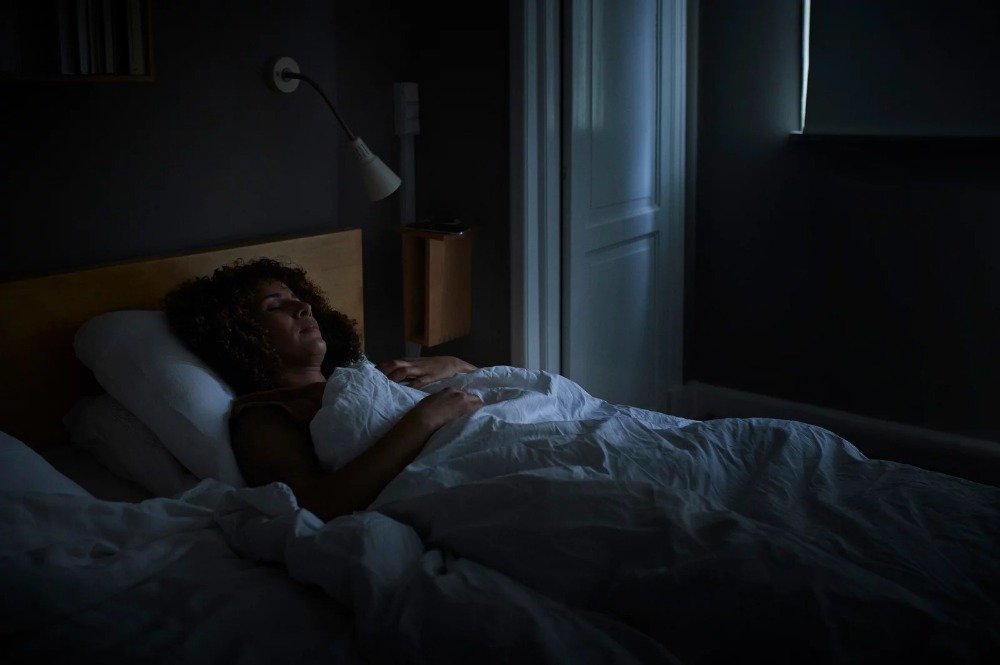
Humans have a natural ability to sense light even when their eyes are closed while sleeping. This is because the human body has an internal clock, also known as the circadian rhythm, which regulates various physiological processes, including the sleep-wake cycle. The circadian rhythm is influenced by environmental cues, such as light and darkness.
Even with closed eyes, the human skin, particularly on the face and eyelids, contains light-sensitive cells called melanopsin-containing retinal ganglion cells. These cells are responsible for detecting light and sending signals to the brain to regulate the circadian rhythm. When these cells are exposed to light, even at low levels, they can send signals to the brain to inhibit the production of the sleep hormone melatonin, which helps regulate sleep.
Sleep in the dark
So, exposure to artificial light at night, even when the eyes are closed, can still have an impact on the quality of sleep and disrupt the natural sleep-wake cycle. This is why it is important to create a sleep-friendly environment with minimal artificial light at night to support healthy sleep patterns and overall well-being. Making sure you're not exposed to outdoor lighting and avoiding the use of electronic devices with bright screens before bedtime are some strategies that can help minimize the impact of light on sleep, even with closed eyes.
Avoid getting sick
Disrupted sleep patterns can lead to a range of health issues. Chronic sleep disruption has been linked to various physical health problems, including an increased risk of obesity, diabetes, cardiovascular diseases, and even certain types of cancer. It can also impact cognitive function, mood regulation, and mental health, leading to issues such as impaired concentration, memory problems, mood disorders, and increased risk of depression and anxiety.
By preserving dark skies and reducing light pollution, we can help protect the natural light-dark cycle and support healthy sleep patterns. Here are some steps to staying healthy:
Do an outdoor home assessment. Walk the perimeter of your house and then walk a few houses away. Do you see any outdoor lights bleeding into your or your neighbor's indoor spaces? Talk to your neighbor. Do you notice any interior lights excessively bleeding into the yard? If so, adjust accordingly.
Do an indoor inventory of lights. Walk through your home and make note of how many lights have color temperatures that are over 4000K (see Kelvin Temperature Scale below). Shift to using a warm light source, preferably under 3000k. Also make note of the inside location of the lights you identified as excessive bleeders on your outdoor assessment walk.
Use dim red or amber lights for night lights. The light is less likely to shift circadian rhythm and suppress melatonin.
Avoid looking at bright blue-light screens beginning two to three hours before bed.
If you work night-shifts or use a lot of electronic devices at night, consider wearing blue-blocking glasses or setting your screens to warm-toned lighting.
Switch your phone light to the warmer end of the color spectrum at sunset.
Additional Reading
Light and sleep by the Sleep Foundation
Effects of artificial light at night on human health | peer reviewed journals and articles
More info on the importance of dark skies is available at Darksky.org. Check back tomorrow for night four of Dark Sky Week.

Why are Dark Sky Communities Like Monte Nido Important?
Dark sky communities, also known as dark sky places, are designated areas where efforts are made to minimize artificial light pollution and protect the natural darkness of the night sky.

The above is a pre-dawn photo of Monte Nido on the first night of Dark Sky Week. Let's continue to turn down our lights.
Dark sky communities, also known as dark sky places, are designated areas where efforts are made to minimize artificial light pollution and protect the natural darkness of the night sky. Here are some reasons why dark sky communities like Monte Nido are important:
Preserving our natural environment and protecting wildlife:
Dark sky communities aim to protect the natural darkness of the night sky, which has significant ecological, cultural, and health benefits. Many species of plants and animals rely on natural light cues for their biological rhythms, including migration, reproduction, and behavior. Artificial light at night can disrupt these natural rhythms, leading to ecological imbalances and negative impacts on wildlife.
Promoting human health:
Excessive exposure to artificial light at night can disrupt human circadian rhythms and negatively impact sleep quality, leading to various health issues such as sleep disorders, hormonal imbalances, and increased risk of chronic conditions like obesity, diabetes, and cancer. Dark sky communities prioritize minimizing light pollution to promote better sleep and overall human health.
Reducing energy waste:
Outdoor lighting that is not properly designed or directed can result in wasteful energy consumption. Dark sky communities promote responsible lighting practices that minimize unnecessary and inefficient use of outdoor lighting, reducing energy waste and associated greenhouse gas emissions, and promoting sustainable energy use.
Supporting astronomy and scientific research:
Dark sky communities provide ideal conditions for astronomy and scientific research, as they offer clear and unobstructed views of the night sky. This is crucial for professional and amateur astronomers alike to observe and study celestial objects, conduct research, and advance our understanding of the universe.
Promoting quality of life:
Many people value the natural beauty of the night sky and the opportunity to connect with the cosmos. Dark sky communities provide residents and visitors with the chance to experience the wonders of the night sky, fostering a sense of wonder, inspiration, and appreciation for our natural world, and enhancing the overall quality of life.
Help keep Monte Nido a Dark Sky community. Make sure to turn off excessive lights at night. A few ways you can help are:
Make sure motion sensor lights aren't triggered by passing cars or trespass beyond the intended area to be lit
Make sure bright gate and driveway lights are on a timer so they're not on past the time that guests are arriving
Turn off string lights when no one is outside to enjoy them
Reduce the use of upward-facing lights that illuminate the sky and opt to use lights that point down
Here are a few articles on why humans need a dark sky…
As a resident of Monte Nido, you have the unique opportunity to be a part of preserving the natural darkness and promoting a healthier lifestyle for yourself and the community. Embrace the beauty of the night sky and join in on the effort to minimize light pollution, conserve energy, and support wildlife preservation. Together, we can make a positive impact on our well-being and the environment and create a healthy future for our community and our planet.
More info on the importance of dark sky communities is available at Darksky.org. Check back tomorrow for night three of Dark Sky Week.

The Darkness Manifesto: On Light Pollution, Night Ecology, and the Ancient Rhythms that Sustain Life
Welcome to the first night of Dark Sky Week: an invitation to turn down your exterior lights and observe the night sky. Tonight we're reading The Darkness Manifesto by Johan Eklöf.

Welcome to the first night of Dark Sky Week: an invitation to turn down your exterior lights and observe the night sky. Tonight we're reading The Darkness Manifesto by Johan Eklöf.
From Darksky.org:
How much light is too much light? Satellite pictures show our planet as a brightly glowing orb, and in our era of constant illumination, light pollution has become a major issue. The world’s flora and fauna have evolved to operate in the natural cycle of day and night. But in the last 150 years, we have extended our day—and in doing so have forced out the inhabitants of the night and disrupted the circadian rhythms necessary to sustain all living things, including ourselves.
In this persuasive, well-researched book, Swedish conservationist Johan Eklöf urges us to appreciate natural darkness, its creatures, and its unique benefits. Eklöf ponders the beauties of the night sky, traces the errant paths of light-drunk moths and the swift dives of keen-eyed owls, and shows us the bioluminescent creatures of the deepest oceans. As a devoted friend of the night, he writes passionately about the startling damage we inflict on ourselves and our fellow creatures simply by keeping the lights on.
The Darkness Manifesto depicts the domino effect of diminishing darkness: insects, dumbfounded by streetlamps, failing to reproduce; birds blinded and bewildered by artificial lights; and bats starving as they wait in vain for food insects that only come out in the dark of night. For humans, light-induced sleep disturbances impact our hormones and weight, and can contribute to mental health problems like chronic stress and depression. The streetlamps, floodlights, and neon signs of cities are altering entire ecosystems, and scientists are only just beginning to understand the long-term effects. The light bulb—long the symbol of progress and development—needs to be turned off.
Educational, eye-opening, and ultimately encouraging, The Darkness Manifesto outlines simple steps that we can take to benefit ourselves and the planet. In order to ensure a bright future, we must embrace the darkness.
You're invited to a reading...
Join the IDA on Sunday, April 16th at 10:00 am PDT (5:00 pm UTC) for a reading of the Darkness Manifesto by author Johan Eklöf, followed by a conversation with author Paul Bogard to celebrate IDSW! Check out this New York Times article to learn more and RSVP on Facebook.
Check back tomorrow for night two of Dark Sky Week.


Get ready to Celebrate International Dark Sky Week 2023!
It's almost here! For the third year in a row Monte Nido is participating in International Dark Sky Week, which officially starts this Saturday, April 15th, and runs through April 22nd.
Every year, the International Dark-Sky Association (IDA) hosts International Dark Sky Week during the month of April in order to create greater awareness about light pollution and its negative consequences, the solutions, and simultaneously celebrate the night. This year, IDA is inviting everyone to discover the night during the week of April 15-22. This is an exciting opportunity to create interest and bring new people into the dark sky movement.

How can you participate?
Spread the word about preserving the night sky! There's an outreach package that you can share with friends and family
Become a Dark Sky Advocate and help others learn about light pollution. Here's a video to get you started.
Get active and involved! Host a neighborhood night walk or scavenger hunt
Share your thoughts! Become a community scientist and submit your observations!
We'll be sharing more ways to get involved throughout the week, so look out for daily prompts in your inbox and on the website.
In the meantime, turn your lights down and look up at the stars! For a bit of inspiration, look at what Monte Nido looked like during a previous Dark Sky Week. If our skies get dark enough, we'll have a good chance of seeing the Milky Way!